Korean Bibimbap
Highlighted under: Fusion Recipes
Discover the vibrant flavors of Korean Bibimbap, a colorful rice dish topped with an array of vegetables, protein, and a spicy sauce.
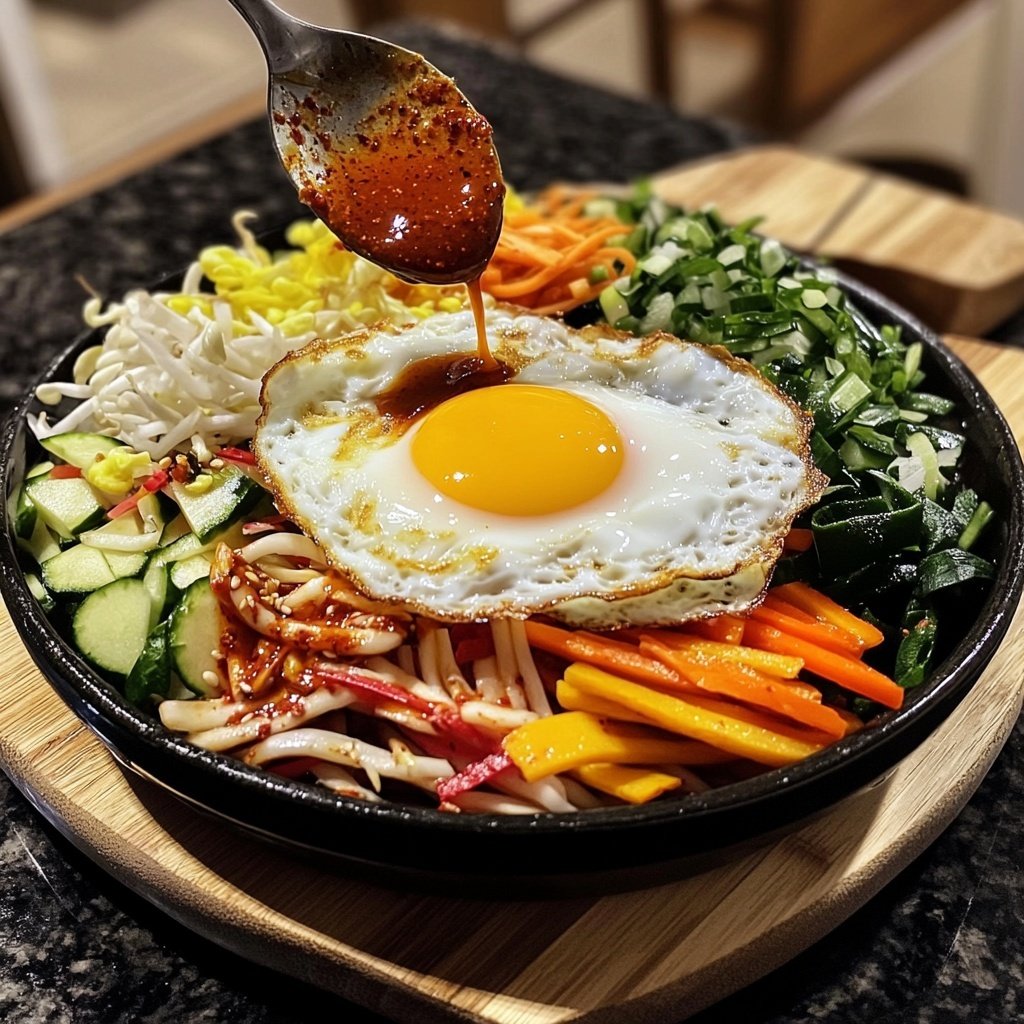
Korean Bibimbap is not just a meal; it's a celebration of colors and flavors. Originating from Korea, this dish brings together rice, fresh vegetables, and a choice of protein, all harmoniously mixed with gochujang sauce for a delightful experience.
Why You'll Love This Recipe
- A beautiful medley of colors and textures
- Nutrient-packed and satisfying
- Customizable with your favorite proteins and vegetables
The Essence of Bibimbap
Bibimbap is more than just a meal; it's a celebration of flavors and textures that represent the harmony of Korean cuisine. This dish traditionally combines rice with an assortment of vegetables, protein, and a spicy sauce, creating a wholesome and satisfying experience. Each ingredient contributes to the dish’s vibrant appearance and rich taste, making it a feast for both the eyes and the palate.
The beauty of Bibimbap lies in its versatility. You can tailor this dish to your preferences by choosing different proteins such as beef, chicken, or tofu, and a variety of vegetables. This allows you to enjoy a personalized bowl that caters to your taste and dietary needs, ensuring that there’s something for everyone.
Health Benefits of Bibimbap
Korean Bibimbap is a nutrient powerhouse packed with vitamins and minerals. By incorporating a range of vegetables like spinach, carrots, and zucchini, you ensure a healthy dose of antioxidants and fiber. This colorful medley not only makes the dish visually appealing but also contributes to a balanced diet, promoting overall health and well-being.
Furthermore, the inclusion of protein sources like beef or tofu adds essential amino acids that help in muscle repair and growth. Coupled with the energizing carbohydrates from the rice, Bibimbap is a satisfying meal that can fuel your day without weighing you down.
Tips for Making the Perfect Bibimbap
To achieve the best Bibimbap, it’s crucial to use freshly cooked rice. Ideally, the rice should be slightly sticky to help hold the ingredients together. You can also use short-grain rice for a more authentic texture. Allowing the rice to cool slightly before assembling the dish will help maintain the integrity of the toppings.
When preparing the vegetables, consider the textures and flavors you want to highlight. Sautéing the carrots and zucchini brings out their natural sweetness, while blanching the spinach and bean sprouts retains their vibrant color and crunch. Don’t hesitate to experiment with other vegetables like mushrooms or bell peppers for added variety.
Ingredients
Gather the following ingredients to create a delicious Korean Bibimbap:
Ingredients
- 2 cups cooked rice
- 1 cup spinach, blanched
- 1 cup carrots, julienned
- 1 cup zucchini, julienned
- 1 cup bean sprouts, blanched
- 4 eggs
- 1 cup sliced beef or tofu
- 2 tablespoons gochujang
- 1 tablespoon sesame oil
- 1 tablespoon soy sauce
- Sesame seeds for garnish
Make sure to have all ingredients prepped before you start cooking for a smooth process.
Instructions
Follow these steps to prepare your Korean Bibimbap:
Prepare the Vegetables
Blanch the spinach and bean sprouts in boiling water for a few minutes, then rinse under cold water. Sauté the carrots and zucchini in a bit of sesame oil until tender.
Cook the Protein
If using beef, marinate in soy sauce and a bit of sesame oil, then stir-fry until cooked. For tofu, sauté until golden brown.
Fry the Eggs
In a separate pan, fry the eggs sunny-side up until the whites are set but the yolks remain runny.
Assemble the Bibimbap
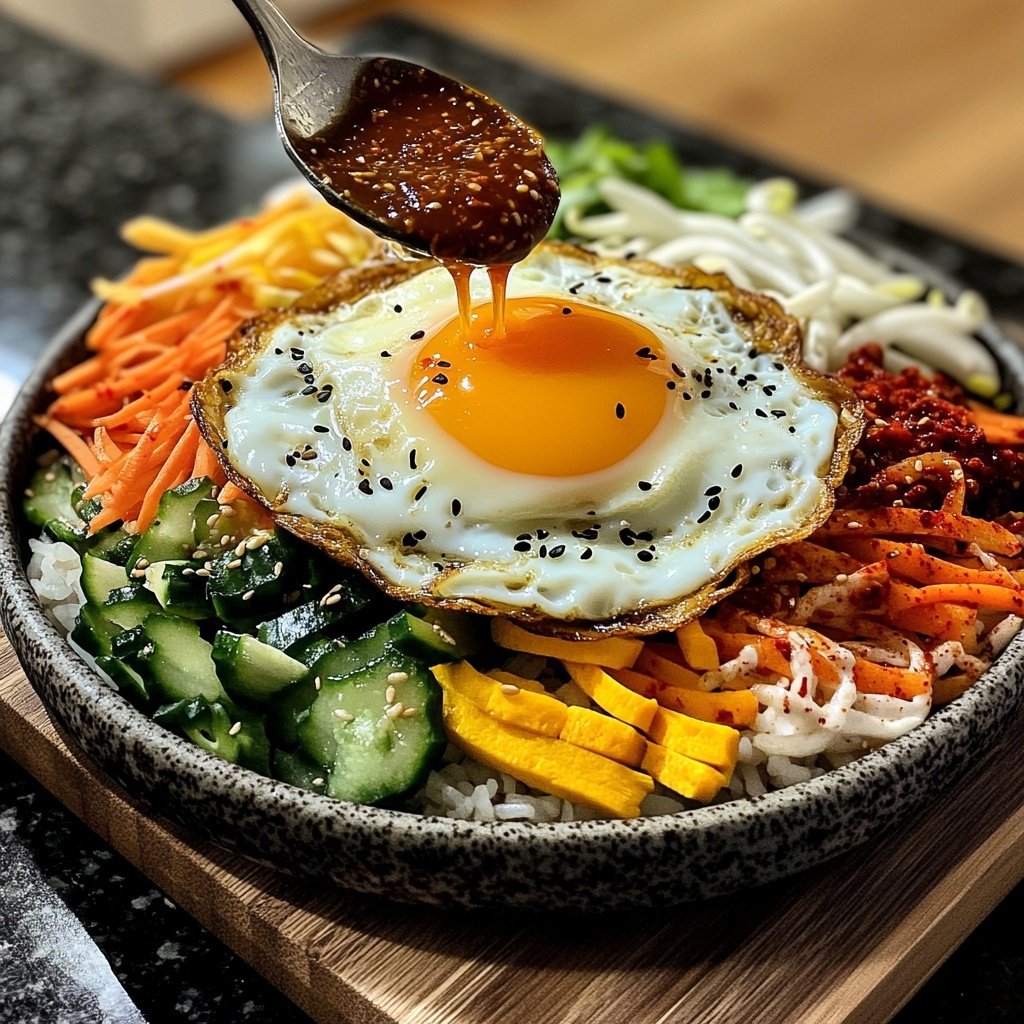
In a bowl, place a serving of rice, and arrange the vegetables and protein on top. Add a fried egg and drizzle with gochujang and sesame oil.
Serve and Enjoy
Mix everything together before eating, and enjoy the burst of flavors!
Enjoy your homemade Korean Bibimbap!
Pro Tips
For extra flavor, add a sprinkle of sesame seeds or chopped green onions on top before serving.
Serving Suggestions
Bibimbap is typically served in a bowl, but you can enhance the dining experience by presenting it in a hot stone bowl, known as Dolsot. This not only keeps the meal warm but also creates a delightful crispy layer of rice at the bottom. Serve it immediately with a side of kimchi for an authentic Korean touch.
For a complete meal, consider pairing your Bibimbap with a light soup such as Miyeok-guk (seaweed soup) or a refreshing cucumber salad. These side dishes complement the rich flavors of Bibimbap and provide additional nutrients.
Storage and Reheating Tips
If you have leftovers, Bibimbap can be stored in an airtight container in the refrigerator for up to three days. However, it's best to keep the components separate until you're ready to eat. This helps maintain the texture and freshness of the ingredients.
To reheat, place the rice in a microwave-safe bowl with a splash of water to add moisture, then heat until warm. You can quickly sauté the vegetables and protein in a pan to revive their flavors and textures before assembling your bowl again.
Questions About Recipes
→ Can I make this recipe vegan?
Yes! Substitute the beef with tofu or tempeh, and use a vegan egg replacement if desired.
→ What other vegetables can I use?
Feel free to add any of your favorite vegetables, such as mushrooms, bell peppers, or radishes.
→ How spicy is Bibimbap?
The spice level can be adjusted based on the amount of gochujang you use. Start with a small amount and add more to taste.
→ Can I prepare this dish in advance?
You can prepare the vegetables and protein in advance, but it's best to cook the rice and assemble the dish just before serving.
Korean Bibimbap
Created by: Wendy Ashbourne
Recipe Type: Fusion Recipes
Skill Level: Intermediate
Final Quantity: 4 servings
What You'll Need
Ingredients
- 2 cups cooked rice
- 1 cup spinach, blanched
- 1 cup carrots, julienned
- 1 cup zucchini, julienned
- 1 cup bean sprouts, blanched
- 4 eggs
- 1 cup sliced beef or tofu
- 2 tablespoons gochujang
- 1 tablespoon sesame oil
- 1 tablespoon soy sauce
- Sesame seeds for garnish
How-To Steps
Blanch the spinach and bean sprouts in boiling water for a few minutes, then rinse under cold water. Sauté the carrots and zucchini in a bit of sesame oil until tender.
If using beef, marinate in soy sauce and a bit of sesame oil, then stir-fry until cooked. For tofu, sauté until golden brown.
In a separate pan, fry the eggs sunny-side up until the whites are set but the yolks remain runny.
In a bowl, place a serving of rice, and arrange the vegetables and protein on top. Add a fried egg and drizzle with gochujang and sesame oil.
Mix everything together before eating, and enjoy the burst of flavors!
Extra Tips
For extra flavor, add a sprinkle of sesame seeds or chopped green onions on top before serving.
Nutritional Breakdown (Per Serving)
- Calories: 550 kcal
- Total Fat: 20g
- Saturated Fat: 4g
- Cholesterol: 186mg
- Sodium: 700mg
- Total Carbohydrates: 75g
- Dietary Fiber: 5g
- Sugars: 5g
- Protein: 20g